





The whole point of mitigation is to stop the damage from growing. Repair is a different job. It is everything done before the repair to protect what is still sound. Our Indianapolis crew mitigates a loss in four moves: control the source, extract the water, contain the wet zone and stabilize the building. Good mitigation makes the later repair smaller, and now and then makes it unnecessary.
The words mitigation and restoration get used as if they were interchangeable. In fact there are two separate stages. During mitigation, the urgent part, the loss is halted, its spread is limited and the home is made stable. Restoration is what comes after: drying is confirmed, and damaged drywall, flooring and finishes are repaired or rebuilt. Because an insurer lists each one separately as well, knowing where you stand in the process is helpful.
A typical mitigation visit covers four things. Source control, so no new water enters. Second is extraction, to clear out standing water. Third is containment, where controlled airflow and plastic barriers keep contaminants and moisture away from clean rooms. Fourth is stabilization: unsalvageable materials come out, surfaces receive antimicrobial treatment, and dehumidifiers and air movers are placed. Furniture and personal items are protected too, either relocated or raised on blocks.
Should You DIY or Call a Pro?
Some simple tasks are suitable for DIY, but most water damage work benefits from professional tools, training, and experience. Here's a comparison:
| Factor | DIY Approach | Professional Service |
|---|---|---|
| Proof for insurer | Some pictures on your phone | Photos plus moisture readings each day |
| Stopping the source | Close a valve, fingers crossed | Cause verified, isolated, recorded |
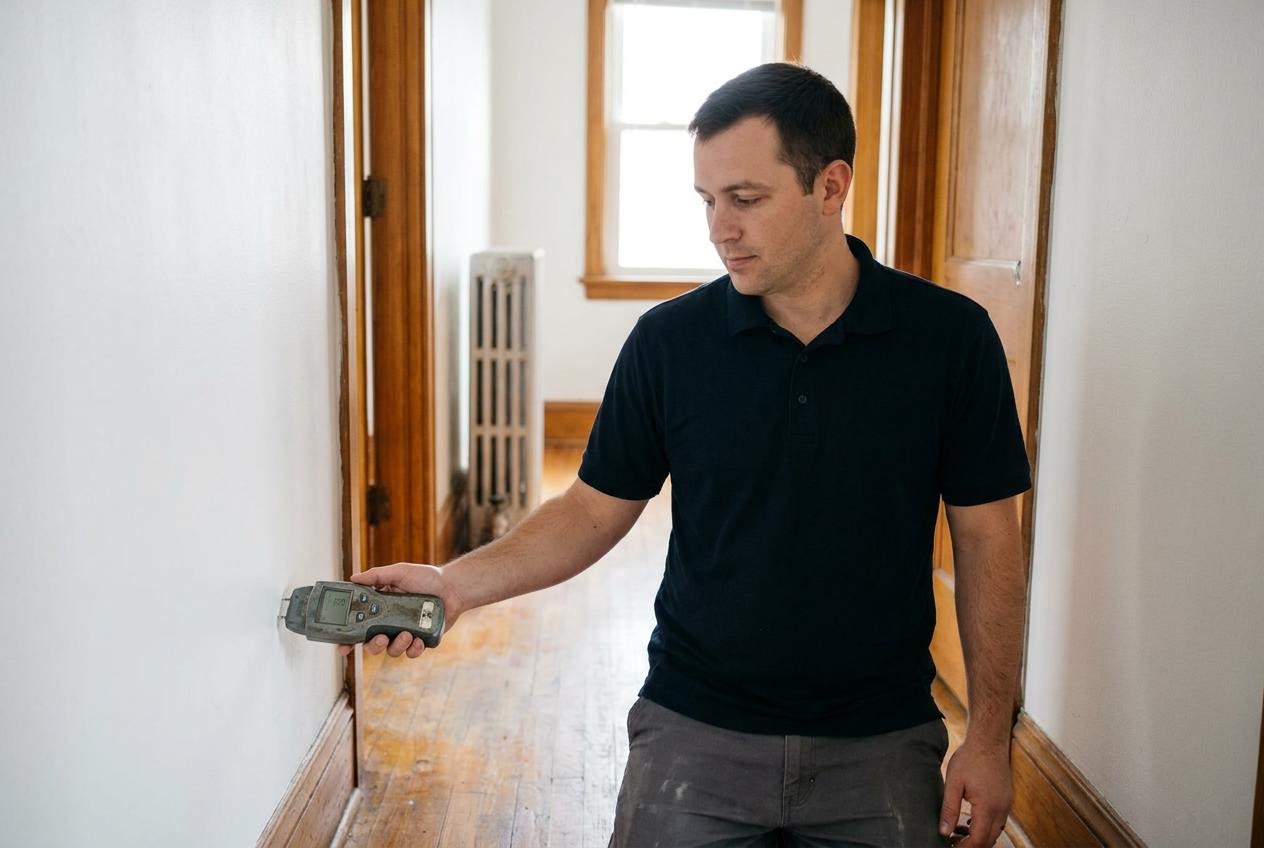
| Drying check | Dry when it feels dry | Each visit measured, not guessed |
| Contamination | Wiping obvious spots with bleach | Treatment chosen by water category |
| Water removal | Soaking it up by hand | Pumps and extractors clear bulk water |
Need Help With Water Damage Mitigation?
Get a free estimate from our expert team today.
Get Help: (224) 379-8760Why Professional Water Damage Mitigation Matters
Fast decisions, one after another, are what mitigation consists of. What drywall stays and dries where it is, and what must be removed? Has the water shifted category since the leak started, and is it Category 1, 2 or 3 now? Should the toe kick under the cabinets be pulled? We answer those questions with training and moisture readings rather than by the look or feel of a surface.
Good mitigation also protects your claim. Owners are required by most policies to take reasonable steps against further damage, and the insurer will ask for evidence. Arrival photos, daily moisture readings and an inventory of removed materials all go into our records. Together those records show the water's effect and our response to it. It also gives the repair contractor a clear starting point, with no wet surprises behind new drywall.
Signs It Is Time for Water Damage Mitigation
Catching these issues early helps you avoid costly problems and protect your property. Watch for these telltale signs that professional help is needed:
- Carpet squishes underfoot, or the pad beneath it is saturated.
- Windows keep fogging and the air feels humid days after the water loss.
- After a leak, the baseboards have swollen or started separating from the wall.
- A musty odor has begun because materials stayed wet for a day.
- Flooring is carrying moisture past the doorway to an adjoining room.
- A roof or window opening is letting rain into the building.
- The insurance company instructed you to take reasonable action against further damage.
Act Before It Gets Worse
What seems like a minor issue today can turn into a major expense tomorrow. If you notice any of these signs, contact Indianapolis Restoration at (224) 379-8760 for a prompt evaluation.
Maintenance Tips for Water Damage Mitigation
A little prevention goes a long way in avoiding expensive restoration emergencies. Follow these tips from our IICRC-certified technicians:
- Ground next to the foundation should fall away from it, which keeps water from collecting there.
- An automatic valve on the main line can cut the water as soon as it detects a leak.
- Find the main water valve and make sure it has not seized.
- In cold months, a heated house protects pipes from freezing, even while you travel.
- Get the water heater checked every year, and replace it ahead of a tank failure.
- Seal gaps around windows, doors and roof penetrations before the next heavy rain arrives.
Questions About Water Damage Mitigation?
Our experienced technicians can assess your situation and recommend the best solution.
Get Help: (224) 379-8760Water Damage Mitigation, Step by Step
Our systematic approach delivers quality results on every project. Here's what you can expect when you choose Indianapolis Restoration:
Control the Source
We shut off the supply, cap the failed line, or tarp and board the opening where water is entering. Should a lasting fix require a plumber or a roofer, our team coordinates when that happens.
Remove Standing Water
We extract standing water using pumps and extraction units, then check carpet and its padding. Drying machines on their own cannot limit damage the way prompt bulk extraction does.
Contain Wet Areas
Plastic barriers and controlled airflow separate wet rooms from dry ones. That way dust, humidity and contaminants do not move through the home during the work.
Stabilize and Dry
We remove what cannot be saved, treat surfaces with antimicrobial, and place dehumidifiers and air movers. Each visit includes logged moisture readings, and the structure is usually ready for repair work within 3 to 5 days.
Your Water Damage Mitigation Questions Answered
Schedule Your Water Damage Mitigation Service
Don't let water damage problems get worse. Call Indianapolis Restoration now for prompt, professional service.
Call (224) 379-8760 Now